I met Jennifer Munson last month and got to chat with her about her aspirations in the creative world. Like Emily and I, Jennifer is interested in good design, branding, crafting and connection. I was interested in her perspective from a younger standpoint, as someone just starting out in this creative business world. What do Those Girls look like to someone who is ten years younger and beginning her creative career? Is this world daunting or inspiring? We asked Jennifer to write from her perspective as in “in-betweener” (post-college, pre-desired career) about navigating the creative world as a newcomer, and how she feels about breaking into a “Those Girls” club, and how she feels about the people behind the styled blogs and shiny businesses. Her answer remarkably spans all ages of creatives.
I think everyone likes to think the perfect answer is out there. This ‘answer’ is as varied as the questions, and the people asking them. The Internet and the vast social media networks at our disposal, along with a multitude of other informational websites have brought unprecedented amount of information to our fingertips. Not just technical, factual information, but the kind of subtle, detailed information that comes from the precious, small moments in everyday life. I think this is the appeal of blogs, largely. It’s not just the information or the ability to find something new, but the ability to peer into someone else’s universe at a strangely intimate angle.
However, there is a tiny, paradoxical caveat in this perspective, and that is that it isn’t real. It’s constructed, a virtual reality, real enough in its own context, but not in the context of a life as it’s being lived. Blogs can be incredibly inspirational, and yet they are untouchable. You cannot curl up and live inside of them. But, I think it might be this imperfect pursuit that makes the ability to connect in this way beautiful.
I’ve dabbled and tiptoed around the edges of creative work for my entire life. I battled with myself over this particularly in college, flip-flopping through five wildly different majors before graduating with a business degree. While I sometimes lament not committing to a more creative option, I think there is a lot of value in what I learned in this field of study. My most valuable lessons were learned while doing my honors thesis on branding. This topic, studied for many labor-intensive hours, is what’s stuck with me the most. Not just because of the time spent doing it, but because branding bleeds into everything: people, businesses, artists, and their work. The successes and failures of branding are everywhere. I cannot help but analyze how great a role it plays in each of our lives today, on a personal level as much as a corporate one.
As much as creativity has always been a part of my life, I’ve never quite given any one thing enough time to become masterfully engaged by it. I feel like I’m a Jane of all trades, master of none. This can be frustrating, but I’ve nonetheless continued in this fashion. In the nearly three years I’ve lived in Seattle I’ve written a variety of blog posts with varying intent. I’ve contributed to music projects (my own, and others’), acted as a studio engineer, songwriter, and vocalist, played bass at a neighborhood block party, filmed short pieces and live performances. I’ve taken classes to learn about live sound, and classes about herbs and wellness. I’ve felted hedgehogs, and knit 2.6 inches of a scarf. I’ve designed logos, banners for bands, and album covers. I’ve consulted with friends and family on their various small businesses, and given them advice and information on the importance of establishing their own brands. When I look back on this chaotic time, I have to acknowledge that I’ve managed to cover a lot of ground. But now I want to pull it all together.
Though my experiences have been scattered, they have brought me a diverse perspective and an appreciation of all creative processes, even those I may not excel in myself. Looking out into a sea of beautiful creators, it can be difficult to feel like there’s a way to break in. However, regardless of what stage they are at now, each successful creative’s path seems invariably the same on a few key points: consistent, diligent output, and there is no quitting. Like the sentiment of ‘failing up,’ there is no such thing as true failure. There is ‘that one thing you did,’ and ‘the thing you do next.’ I’ve learned that I need to prepare myself to persevere, not if, but when I embarrass myself in a creative ‘failure.’ I struggle to tame this fear, but I’ve realized that there is no success without these moments. I take comfort in the fact that pursuing a creative living is in many ways very simple, and fully within my control. No one beside myself can stop me from trying.
All the knowledge in the world is well and good, but nothing without making connections. Meeting people, and learning about them, what they do, and conveying ones own goals and passions is perhaps the greatest tool anyone has. As much as my life post-college has not gone the way I imagined it might have, all of the experiences I am most grateful for have been as a result of the people I’ve met. This is another super exciting aspect of blogs, there are so many more people to meet, and most of these creative individuals are in charge of their careers independently. People are able to connect almost instantly over topics they mutually love or are interested in. Bloggers tend to form strong communities. So, you’re not just viewing a webpage, you’re actively engaging with another human. Blogs are the ultimate form of people watching. If you look to any number of highly successful bloggers, people who seem to just draw people in, odds are you’ll notice they have branded themselves well. A good brand is a concise, accurate, an open representation of the person. When things start to feel too fabricated and glossed over, this connection becomes more feeble. Design and brand should help to connect people, and I think those who have had success in creating an online presence proves this.
There are lots of ways to create a professional and confident image, but it is less easy to inject the right amount of warmth into this manicured persona. This is where consistency and content really come into play. It’s not just that you’ve put something together to showcase; it’s being present, showing that you care, being accessible. I’d like to cultivate this kind of attitude and style with my own work, display myself in a way that is clean and professional, yet, much like the “Those Girls” series, I want it to be real and approachable too.
I think there will always be room for those who aspire to live and work creatively, but it requires a relentless work ethic, business sense, and a strong awareness of image. If any of these ingredients are lacking, the task becomes considerably more challenging. As someone just starting out, someone with a compass that seems to point in every direction, I’m starting to find comfort in the chaos. So far my observations of others’ success have emphasized less the creative processes itself, and more about the people doing them, they way they work as a whole, the fact that they produce an ever-growing body of work. I’m starting to appreciate how valuable it can be to embrace my own chaos, and take advantage of the fact that I’ve done so many varied things. Doing is the real important part. So I’m going to do- as much as I can with the tools at my disposal.
Thank you, Jennifer! You can follow Jennifer at her website, or on Twitter or Instagram.
Photos courtesy Jennifer Munson.
Showing posts with label guest post. Show all posts
Thursday, March 27, 2014
Monday, June 10, 2013
Special Guest Post: Recommended Reads You May Have Missed in High School
It's summer time! And you know what that means--summer reading! Rather than take a copy of the most recent bestseller to the shore or on the plane or to your grandma's house, take Christian's recommendations below. Christian Powers is the English Department Head at Federal Way High School in Washington, and is an avid reader, writer and lover of literature. (And he also happens to be Andie's husband). We asked him what he thought we should be reading, and he gave us an earful. Thanks, Christian!
---
If you were one of those kids who read every page of every book assigned in school, we all owe you a long, solemn standing ovation. That sort of thing isn’t easy—I’ll admit that I couldn’t pull it off, myself. But even if you take pride in your teen reading habits, I wouldn’t check those books off your list just yet: they might be worth another read.
Now that I have the privilege of teaching high school English, I get the opportunity to reread some of the perennial classroom classics (including a few I never got around to as a kid) and I’ve been thrilled to find some powerful and thoroughly engaging stories. I’m finding that perspective affects your reading of a book as much as the ink on the page, so if you’ve read these before, consider taking a look from your current vantage point. Furthermore, if you haven’t read these, keep in mind that none of them were written for a teen audience. These are all serious books, written by serious adults. Seriously. So, here are my thoughts on a few “high school books” that are probably more enjoyable now that you don’t have homework.
The Catcher In The Rye
When I tried to read Catcher In The Rye as a teenager, I couldn’t stand the entitled, whiny, and relatively clueless voice of narrator, Holden Caulfield. But when I tried again in my mid-twenties, it was a completely different experience. Holden is lost and pathetic, yes, but Salinger manipulates Caulfield’s voice so deftly, I couldn’t help but feel for the little guy. Holden’s innocence and ignorance create a space that allows the reader to see plainly what our sad narrator can’t. It’s a poignant rumination on the loss of innocence, and the awkwardness of being stuck between youth and adulthood without the guidance of understanding or hindsight.
Frankenstein
If you’re unfamiliar with Mary Shelley’s novel, it’s time to remedy that situation. It's much different from what you might expect if all you know of this story is the flat-topped, bolt-necked green guy from cartoons. You get the French Alps, you get unattainable love, you get complete and utter despair, you get a complex novel of multiple perspectives and formats (including the monster’s perspective, after it learns to read and write from a blind man). Plus, you can feel terrible about yourself, knowing that Shelley was eighteen when she wrote a book that pioneered countless conventions and tropes of the sci-fi and horror genres.
As I Lay Dying
The only Faulkner I read in high school was the haunting story, “A Rose For Emily” (although the breathtaking “Barn Burning” should be his most anthologized). I enjoyed it quite a bit, but I didn’t fall in love with his work until well into my college years. As I Lay Dying is his only novel taught in schools, and I suppose that makes sense—in spite of its fifteen separate narrators(!), it’s one of Faulkner’s most accessible books. In the book, the Bundren family sets off to transport the body of their deceased matriarch to be buried in her hometown. The real draw is the subtlety in Faulkner’s portrayal of each character, which creates an emotionally intricate mess of a family—through a complexity that deepens and expands with each new perspective. Also, Renaissance man James Franco recently wrapped a big screen adaptation (his directorial debut), that is, by early accounts, not so bad. No matter what, I’m going to guess that reading the book first might come in handy this time around.
Of Mice And Men
Steinbeck’s simplest and shortest novel could be read in a single sitting, if you’ve got an open Saturday. It’s a riff on the author’s favorite subject: loneliness (hint—it takes place in near a town called Soledad). It’s a striking portrait of the lives of migrant workers in depression-era California that hinges on themes of friendship and mercy. The language is gorgeous and Steinbeck’s ear for dialogue is as sharp as it is in any of his books. It’s a bit of a heartbreaker, sure, but it’s also overflowing with wit and humanity.
To Kill A Mockingbird
This is such a formative book for many young people that it almost doesn’t need anyone’s recommendation. Don’t worry—it’s still amazing and will break your heart, every time. I’m actually disappointed if kids don’t cry in class when Tom Robinson’s verdict is read—I wonder if I should read it again, slower. I realized that there was so much I’d missed as a kid, including quite a bit of humor and charm. It’s about injustice and growth. It’s about choosing courage and kindness, even (or especially) in the face of helplessness. If, in terms of age, you were closer to Scout than Atticus when you last read it, read it again, soon.
The Great Gatsby
Now that Baz Luhrman’s adaptation has hit movie theaters, this book is suddenly a hot topic. But if you haven’t read it since high school (if at all), grab a copy. Narrated by the awkward outsider Nick Carraway after a whirlwind stint in New York, we get a fleeting glimpse of unbridled pre-crash American decadence. But in spite of the wild living, everything is always just out of reach for every character concerned. They try to lie, cheat, and spend their way to happiness, but it eludes each of them. There’s a pervading sadness pulsing through this book, threatening the hopes of everyone concerned. And it’s got some of the best sentences you’ll ever read.
Fahrenheit 451
Instead of the big scary government controlling of our freedoms (like Big Brother in 1984), Bradbury presents a much more frightening scenario. Society has gradually lost interest in personal relationships and the arts in favor of the fastest, loudest, and most immediate pastimes (like wall-sized TVs with shows that simulate reality, or tiny earphones that people never ever remove, for instance). Walking outside is suspicious activity, as is having an extended conversation. Oh yeah—and books are absolutely, totally forbidden. Ray Bradbury offers us an entirely unsettling dystopic vision that is more plausible than most others.
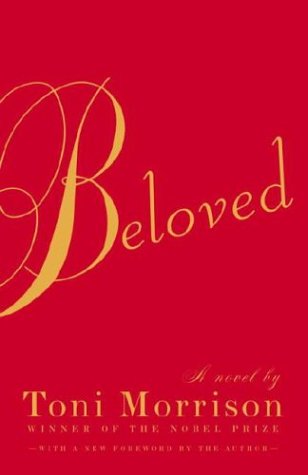
Beloved
I don’t know if many people have been assigned this novel in schools, but it’s been on the AP list for a while, so I figured it was fair game. It’s the shocking story of a horrific act carried out by a desperate runaway slave, and the irrevocable consequences that follow. Toni Morrison is one of three Nobel Prize winning Americans on this list (along with Faulkner and Steinbeck), and it’s easy to see why she completely deserved it. This book will haunt you. I realize that my last sentence is a bit of a pun, but there’s really no better way to explain the effects of Morrison’s prose.
Now that I have the privilege of teaching high school English, I get the opportunity to reread some of the perennial classroom classics (including a few I never got around to as a kid) and I’ve been thrilled to find some powerful and thoroughly engaging stories. I’m finding that perspective affects your reading of a book as much as the ink on the page, so if you’ve read these before, consider taking a look from your current vantage point. Furthermore, if you haven’t read these, keep in mind that none of them were written for a teen audience. These are all serious books, written by serious adults. Seriously. So, here are my thoughts on a few “high school books” that are probably more enjoyable now that you don’t have homework.
The Catcher In The Rye
When I tried to read Catcher In The Rye as a teenager, I couldn’t stand the entitled, whiny, and relatively clueless voice of narrator, Holden Caulfield. But when I tried again in my mid-twenties, it was a completely different experience. Holden is lost and pathetic, yes, but Salinger manipulates Caulfield’s voice so deftly, I couldn’t help but feel for the little guy. Holden’s innocence and ignorance create a space that allows the reader to see plainly what our sad narrator can’t. It’s a poignant rumination on the loss of innocence, and the awkwardness of being stuck between youth and adulthood without the guidance of understanding or hindsight.
Frankenstein
If you’re unfamiliar with Mary Shelley’s novel, it’s time to remedy that situation. It's much different from what you might expect if all you know of this story is the flat-topped, bolt-necked green guy from cartoons. You get the French Alps, you get unattainable love, you get complete and utter despair, you get a complex novel of multiple perspectives and formats (including the monster’s perspective, after it learns to read and write from a blind man). Plus, you can feel terrible about yourself, knowing that Shelley was eighteen when she wrote a book that pioneered countless conventions and tropes of the sci-fi and horror genres.
As I Lay Dying
The only Faulkner I read in high school was the haunting story, “A Rose For Emily” (although the breathtaking “Barn Burning” should be his most anthologized). I enjoyed it quite a bit, but I didn’t fall in love with his work until well into my college years. As I Lay Dying is his only novel taught in schools, and I suppose that makes sense—in spite of its fifteen separate narrators(!), it’s one of Faulkner’s most accessible books. In the book, the Bundren family sets off to transport the body of their deceased matriarch to be buried in her hometown. The real draw is the subtlety in Faulkner’s portrayal of each character, which creates an emotionally intricate mess of a family—through a complexity that deepens and expands with each new perspective. Also, Renaissance man James Franco recently wrapped a big screen adaptation (his directorial debut), that is, by early accounts, not so bad. No matter what, I’m going to guess that reading the book first might come in handy this time around.
Of Mice And Men
Steinbeck’s simplest and shortest novel could be read in a single sitting, if you’ve got an open Saturday. It’s a riff on the author’s favorite subject: loneliness (hint—it takes place in near a town called Soledad). It’s a striking portrait of the lives of migrant workers in depression-era California that hinges on themes of friendship and mercy. The language is gorgeous and Steinbeck’s ear for dialogue is as sharp as it is in any of his books. It’s a bit of a heartbreaker, sure, but it’s also overflowing with wit and humanity.
To Kill A Mockingbird
This is such a formative book for many young people that it almost doesn’t need anyone’s recommendation. Don’t worry—it’s still amazing and will break your heart, every time. I’m actually disappointed if kids don’t cry in class when Tom Robinson’s verdict is read—I wonder if I should read it again, slower. I realized that there was so much I’d missed as a kid, including quite a bit of humor and charm. It’s about injustice and growth. It’s about choosing courage and kindness, even (or especially) in the face of helplessness. If, in terms of age, you were closer to Scout than Atticus when you last read it, read it again, soon.
The Great Gatsby
Now that Baz Luhrman’s adaptation has hit movie theaters, this book is suddenly a hot topic. But if you haven’t read it since high school (if at all), grab a copy. Narrated by the awkward outsider Nick Carraway after a whirlwind stint in New York, we get a fleeting glimpse of unbridled pre-crash American decadence. But in spite of the wild living, everything is always just out of reach for every character concerned. They try to lie, cheat, and spend their way to happiness, but it eludes each of them. There’s a pervading sadness pulsing through this book, threatening the hopes of everyone concerned. And it’s got some of the best sentences you’ll ever read.
Fahrenheit 451
Instead of the big scary government controlling of our freedoms (like Big Brother in 1984), Bradbury presents a much more frightening scenario. Society has gradually lost interest in personal relationships and the arts in favor of the fastest, loudest, and most immediate pastimes (like wall-sized TVs with shows that simulate reality, or tiny earphones that people never ever remove, for instance). Walking outside is suspicious activity, as is having an extended conversation. Oh yeah—and books are absolutely, totally forbidden. Ray Bradbury offers us an entirely unsettling dystopic vision that is more plausible than most others.
Beloved
I don’t know if many people have been assigned this novel in schools, but it’s been on the AP list for a while, so I figured it was fair game. It’s the shocking story of a horrific act carried out by a desperate runaway slave, and the irrevocable consequences that follow. Toni Morrison is one of three Nobel Prize winning Americans on this list (along with Faulkner and Steinbeck), and it’s easy to see why she completely deserved it. This book will haunt you. I realize that my last sentence is a bit of a pun, but there’s really no better way to explain the effects of Morrison’s prose.
Subscribe to:
Posts (Atom)